RRA LUR Successfully Concludes the Leadership of DIVERSE Work Package 2
In September 2026, the Regional Development Agency of the Ljubljana Urban Region (RRA LUR) successfully concluded its leadership of Work Package 2 – A Trial for Biodiversity-Friendly Bioenergy within the European project DIVERSE – Biodiversity-Friendly Bioenergy, implemented under the Interreg Alpine Space Programme.Work Package 2 represented one of the key implementation phases of the project. Together with project partners, we tested across different areas of the Alpine Space how open dialogue among key stakeholders can help connect biodiversity conservation with the sustainable use of biomass for energy production. The aim was to explore different local biomass utilisation pathways and develop solutions that take into account both nature conservation requirements and the needs of local communities and actors along bioenergy value chains.
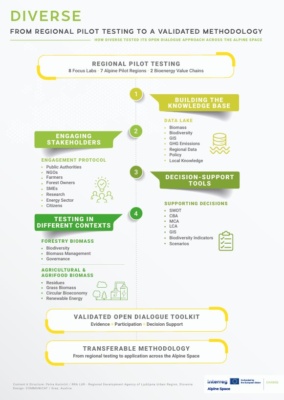
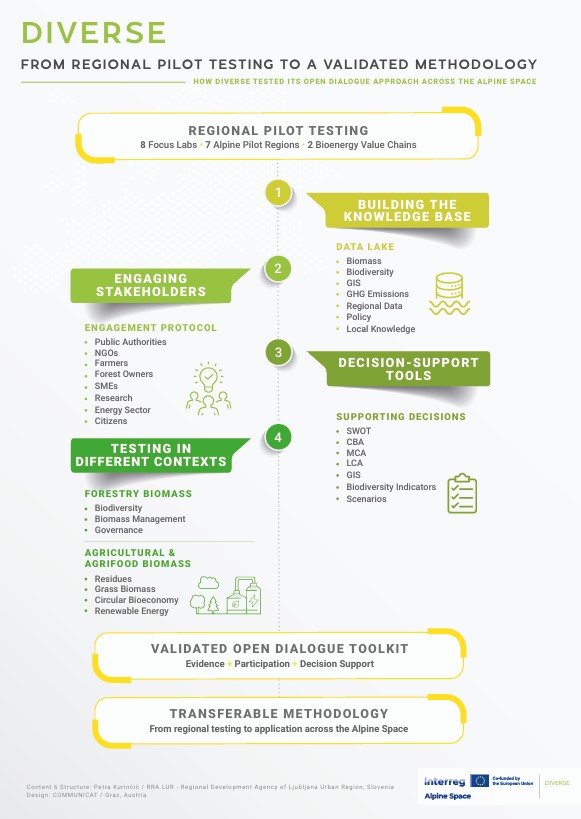
DIVERSE – from regional pilot testing to a validated methodology
From Open Dialogue to Concrete Local Solutions
An important part of Work Package 2 was the implementation of the DIVERSE Open Dialogue Approach, which enabled different stakeholder groups to participate in the development and testing of local solutions.
Within the project, 8 Focus Labs were implemented, comprising a total of 33 meetings. The activities involved 284 unique stakeholders, with 503 stakeholder attendances recorded overall. In addition, 76 questionnaires were collected to capture the experiences and feedback of participants.
Local activities were also connected at the transnational level. Within three Thematic Working Groups, a total of 9 meetings were organised, during which partners compared experiences, exchanged results from pilot activities and jointly explored solutions to challenges related to bioenergy development and biodiversity conservation.
Slovenian Pilot in the Ljubljana Marshes
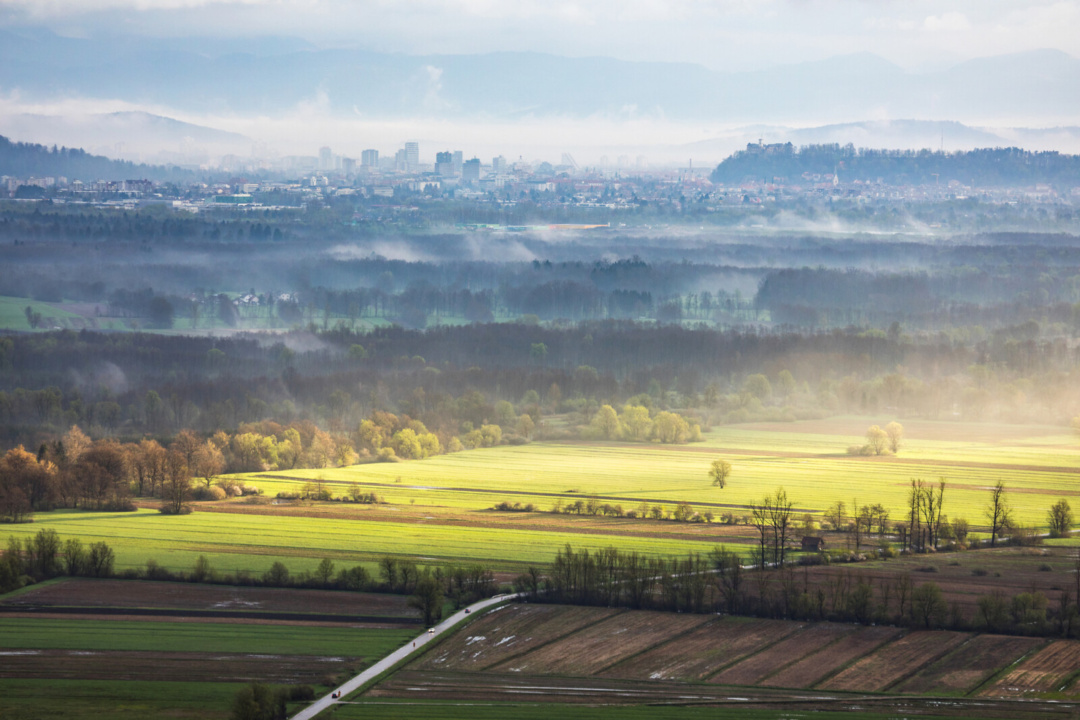
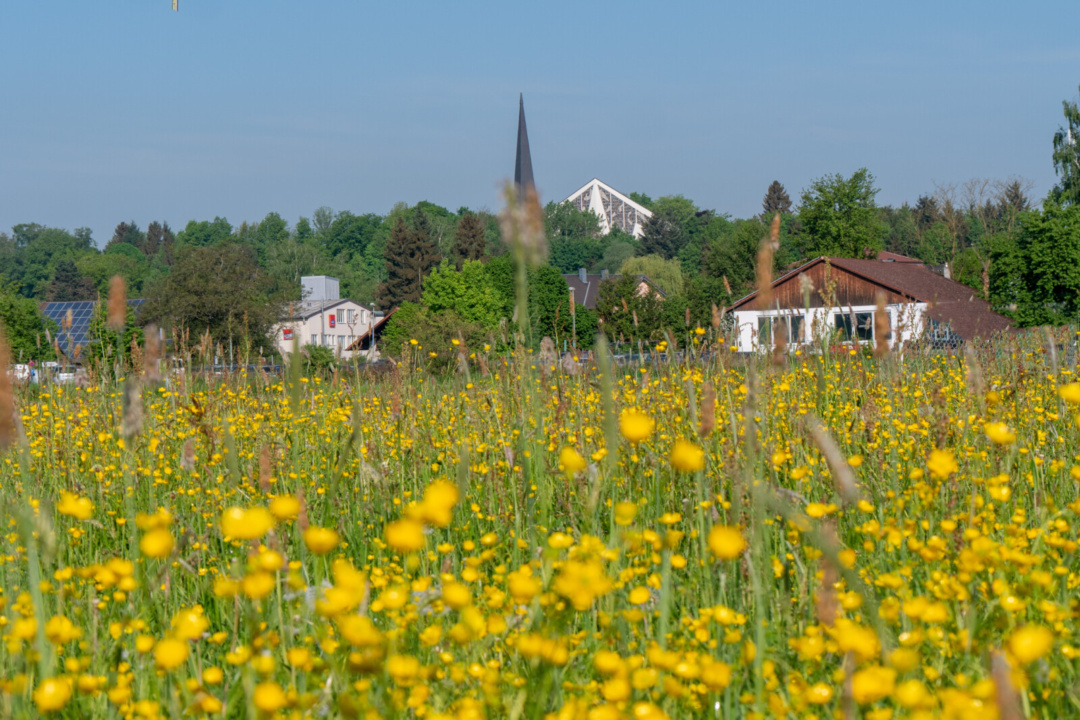
RRA LUR, together with the Ljubljana Marshes Nature Park, implemented the Slovenian pilot focusing on the potential use of biomass from late-mown grasslands in the Ljubljana Marshes.
Late mowing plays an important role in preserving habitats and biodiversity; however, the resulting biomass is often of lower quality for conventional agricultural use. The project therefore explored possibilities for integrating this biomass into local bioenergy value chains.
Two Focus Labs, organised in February and March 2026, brought together representatives from nature conservation, agriculture, the energy sector, public authorities and other relevant local and national stakeholders. Expert analyses and stakeholder discussions indicated a potential availability of approximately 600 tonnes of such biomass per year in the area. One of the pathways identified for further development was a cooperative approach connecting biomass providers and other key actors within a common local value chain.
Sharing Knowledge Across the Alpine Space
An important result of Work Package 2 was the exchange and integration of knowledge and experience generated across the different pilot areas.
Partners analysed and compared the results of their local activities and translated them into joint project results. Particular attention was given to identifying which solutions can be transferred to other territories and which nature conservation, technical, economic and organisational conditions need to be in place for sustainable bioenergy value chains to develop successfully.
A key result bringing together the work carried out throughout Work Package 2 is Output 2.1, prepared under the leadership and coordination of RRA LUR in close cooperation with the international DIVERSE project partners. The output consolidates the knowledge, experiences and results generated through the Focus Labs, pilot activities, thematic cooperation and joint learning processes across the participating Alpine territories. Output 2.1 will also be made publicly available, enabling the results and lessons developed within Work Package 2 to be shared beyond the project partnership and used by other interested organisations, experts, decision-makers and territories.
As part of the Joint Learning activities, we also produced three video contents, which will be available on the DIVERSE project website. This will ensure that the knowledge developed and collected within Work Package 2 remains accessible beyond the completion of its activities.
The first video has already been published – Joint Learning Session: Forestry Value Chain, presented by Prof. Dr Adam Clark. The video presents key aspects of the forestry value chain and explores opportunities to link the sustainable use of forest biomass with biodiversity conservation.
Two additional video contents will follow, both developed within Work Package 2. Together, the three videos will provide a lasting learning resource for project partners, experts, decision-makers and other interested stakeholders, while supporting the further dissemination and transfer of knowledge generated through the DIVERSE project.
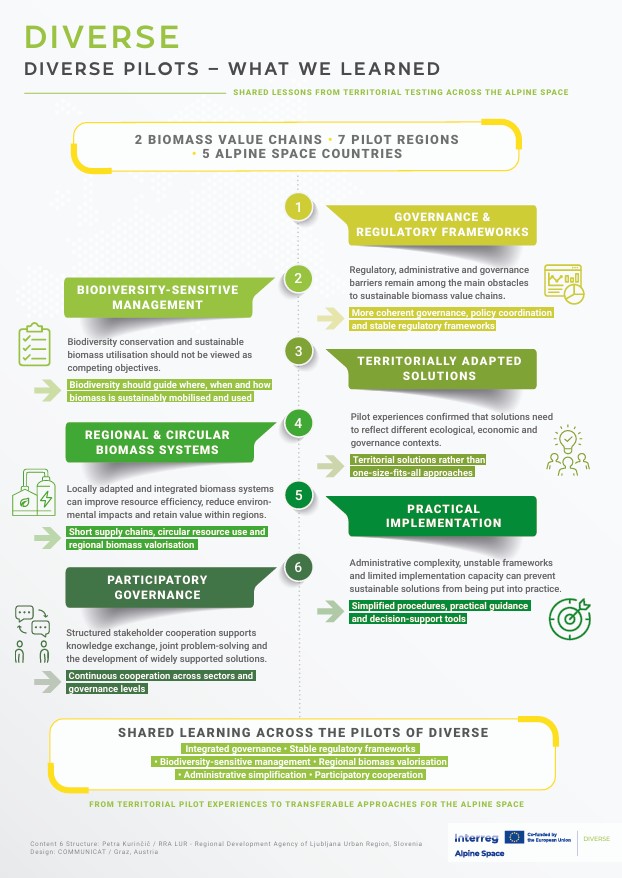
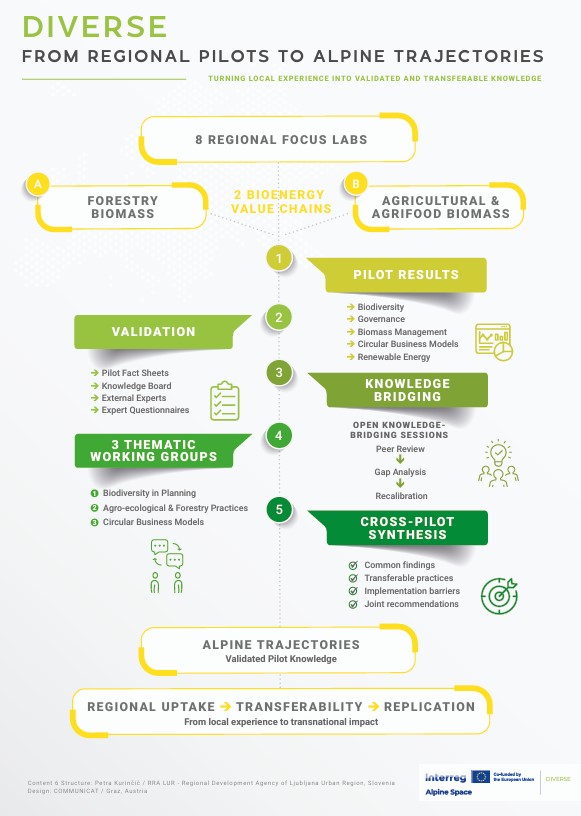
In addition to the video materials, three infographics were prepared within Work Package 2. They provide a clear and accessible visual overview of the key findings, ranging from different development trajectories across the Alpine Space to the results and lessons emerging from the pilot activities.
An Important Milestone for the DIVERSE Project
The completion of Work Package 2 marks an important milestone for DIVERSE. The results show that the sustainable use of biomass is not only a technical or energy-related issue. Developing successful solutions requires the early involvement of nature conservation actors, landowners, farmers and foresters, energy-sector representatives, public authorities, local communities and other relevant stakeholders.
One of the most important achievements of Work Package 2 was therefore the establishment of dialogue between sectors that often operate separately when planning bioenergy solutions.
As the leader of Work Package 2, RRA LUR coordinated the implementation of activities and the preparation of joint results across the entire project partnership. The successful completion of the work package is therefore the result of intensive cooperation among all project partners, who implemented Focus Labs and pilot activities in their territories, provided data and results, contributed to the preparation and review of project results, and participated in joint learning and communication activities.
The knowledge, experience and results generated within Work Package 2 provide an important foundation for the next stages of DIVERSE, where the focus will increasingly shift from testing local solutions towards the transfer, uptake and long-term integration of project results into practices and policies across the Alpine Space.