
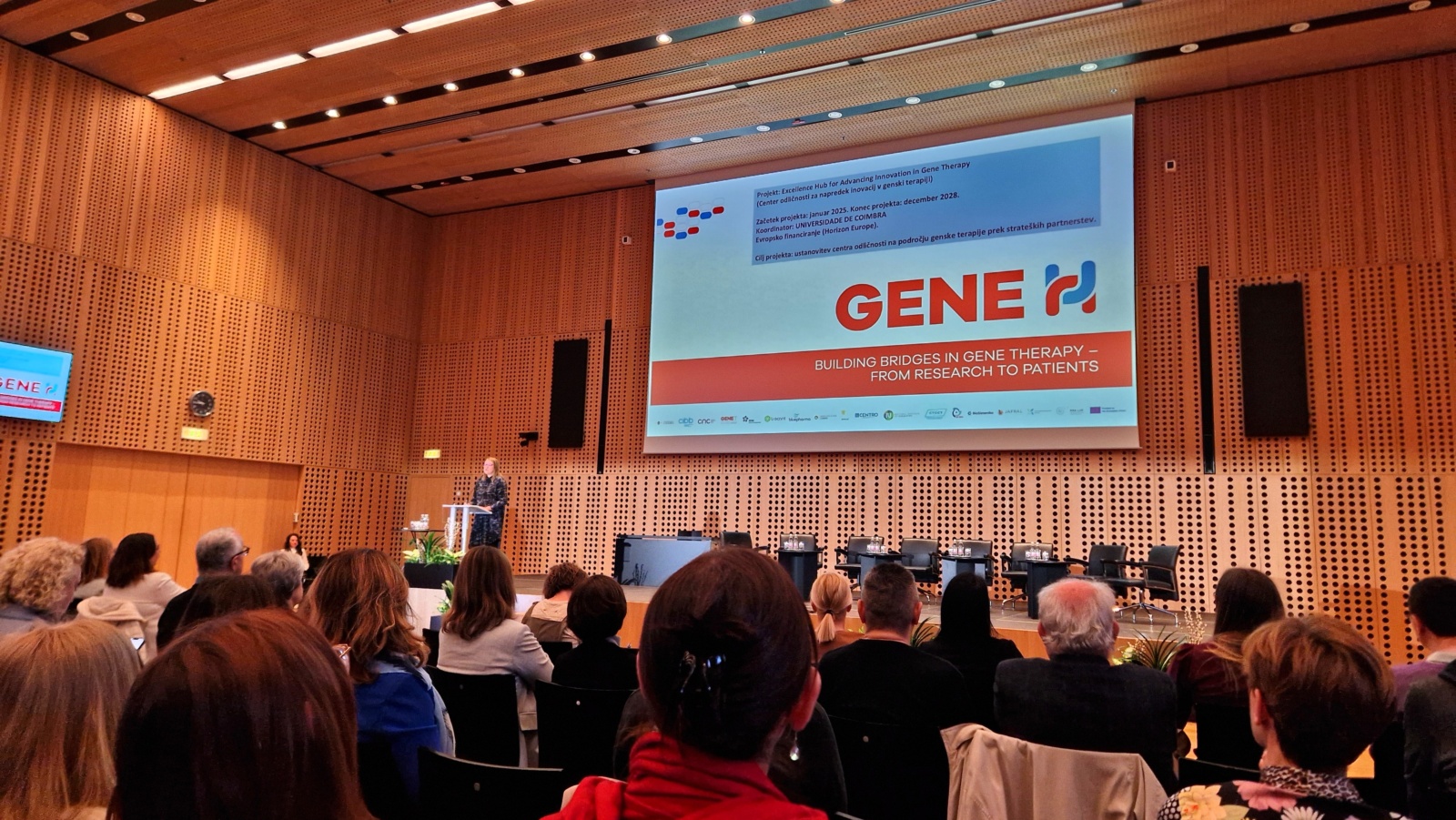
The conference was organised by the Ministry of Health in cooperation with the Association for Rare Diseases of Slovenia, the Association of Patients’ Organisations of Slovenia (ZOPS) and the Association of Patients with Blood Diseases of Slovenia. Rare Disease Day is symbolically marked on 29 February – the rarest day of the year, and on 28 February in non-leap years.
Participants were welcomed by the Minister of Health, Dr Valentina Prevolnik Rupel, who highlighted the importance of collective efforts to improve the care of patients:
“This is a field where expertise and compassion are equally important, and where we must persist in systemic solutions that ensure fairness, accessibility and long-term sustainability.”
As one of the most significant achievements of the past year, she highlighted the development of the first Slovenian medicine for the treatment of CTNNB1 syndrome, Urbagen, which was developed largely in a non-profit environment and is prepared for clinical use – meaning for the actual treatment of patients. The creation of the medicine is closely linked to the exceptional dedication and initiative of Dr Špela Mirošević, the mother of Urban, after whom the therapy is named. The Minister emphasised that this achievement also triggered important systemic changes: an amendment to the Scientific Research and Innovation Activity Act was adopted, enabling public funding for the development of non-commercial medicines for rare childhood diseases, provided that such medicines remain permanently accessible to patients in Slovenia at a non-profit price.
The programme included expert presentations and discussions addressing issues such as the financing of medicines, the treatment of specific rare diseases and the rights of patients and their families. Particular emphasis was placed on the role of patient organisations in shaping health policies and strengthening cooperation between the research and healthcare sectors.
At the conference, Dr Tanja Zdolšek Draksler from ZOPS also presented the European project GeneH (Excellence Hub for Advancing Innovation in Gene Therapy), which brings together research institutions, industry, civil society and public authorities – the actors of the so-called quadruple helix – with the aim of overcoming barriers in the development of gene therapies and accelerating their transfer from research to clinical application. She also presented the results of a survey on the views of Slovenians regarding the development and use of gene therapies, conducted by the GeneH partners in 2025. Nearly 300 residents of Slovenia participated in the survey. The results show that the public has very high expectations regarding the potential of gene therapies to improve quality of life, while also expressing concerns about safety, accessibility and fairness in access to such treatments. Respondents indicated the highest level of trust in doctors, researchers and clinical geneticists, while showing greater scepticism towards information coming from media or commercial sources. Many respondents also emphasised the need for clear, reliable and understandable information about new therapies, as well as a stronger role for patients and their organisations in shaping health policies.
For RRA LUR, participation in the conference provided valuable insights into the development of gene therapy, the challenges of translating innovations into practice and the existing gaps within the ecosystem, while also offering an opportunity to meet other partners of the GeneH project. Attending such events contributes to the strengthening of the innovation ecosystem and to connecting knowledge, investment and societal needs across the wider European space.


