
IURC Enhancing the Cooperation Between the University of Ljubljana and the Kyoto Institute of Technology
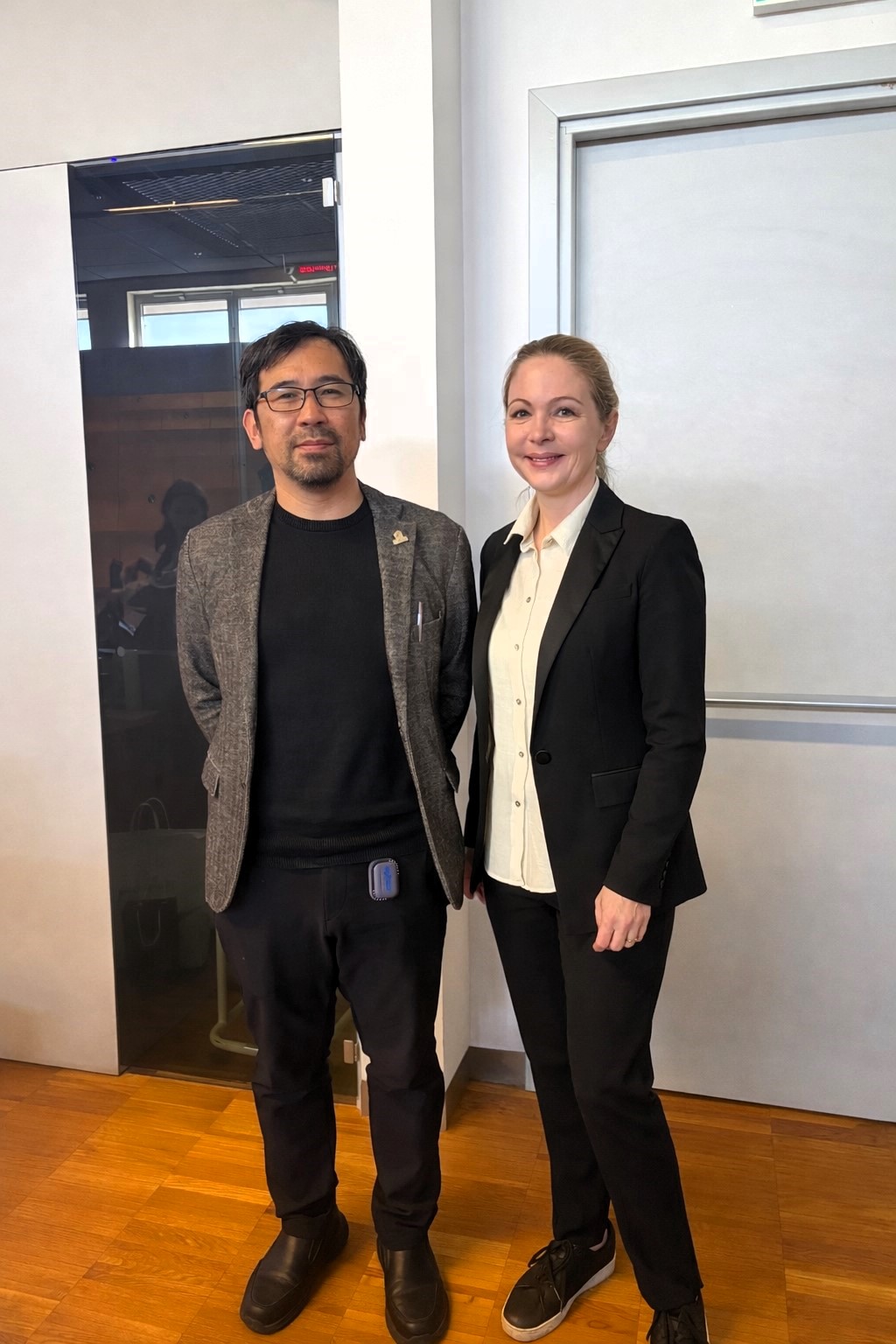
On 19 March 2026, Prof. Yoichi Kumada introduced the Kyoto Institute of Technology to students of the University of Ljubljana and presented a range of international opportunities for study and research. The event took place within the framework of an existing academic cooperation with the Faculty of Chemistry and Chemical Technology, with the International Urban and Regional Cooperation (IURC) programme expanding the initiative to students from the Biotechnical Faculty. This opened new opportunities for interdisciplinary collaboration, mobility, and broader knowledge exchange across chemistry, biotechnology, and engineering.
 The JoinTECH programme was also presented, through which the Kyoto Institute of Technology (KIT) systematically promotes international cooperation and student exchanges. The programme includes various forms of collaboration—from online networking and short study visits to longer research stays and seminars with international experts. JoinTECH thus represents a flexible and modern framework for academic mobility, joint learning, and the establishment of long-term partnerships between institutions.
Special attention was dedicated to the presentation of an upcoming opportunity, KIT Summer School 2026: Bio-Innovation Through Engineering: Materials, Processes and Industry, which will take place in Kyoto from 9 to 24 July 2026. The programme will offer participants insight into the fields of biomaterials, diagnostics, bioproduction, biomedical sensing, and biopharmaceutical manufacturing, while also demonstrating how knowledge from materials science, chemistry, biochemistry, and chemical engineering is transferred into industrial practice. Under the leadership of Prof. Yoichi Kumada and Associate Prof. Elie Marin, the programme will combine lectures with visits to Japanese technology companies, providing students not only with in-depth academic insight but also with direct exposure to the industrial environment.
The event was enhanced by personal perspectives on studying in Japan. A KIT student and a Slovenian student, currently on exchange at KIT, shared their experiences of living and studying in Kyoto, offering a direct and authentic view of the academic environment, research work, and everyday life at a Japanese university.
At a time when the world faces major challenges in sustainability, climate change, and food security, international academic cooperation is becoming increasingly important for developing innovative solutions and the effective exchange of knowledge. The expansion of the long-standing collaboration between Prof. Aleš Podgornik from the Faculty of Chemistry and Chemical Technology and Prof. Kumada from KIT to the Biotechnical Faculty of the University of Ljubljana, which is one of the key institutions in the innovation ecosystem in the field of agriculture in the Ljubljana Urban Region, represents an important contribution to strengthening interdisciplinary and international cooperation. The event, which was also attended as part of the IURC programme’s networking activities by Ms. Tina Pezdirc Nograšek from the Regional Development Agency of the Ljubljana Urban Region, marks a step forward in further strengthening cooperation between Slovenia and Japan.
Initiatives supported within the IURC programme confirm that important partnerships often begin precisely through open dialogue and the bringing together of different environments. Through cooperation among institutions, researchers, and regions, new opportunities are emerging for joint development, innovation, and a sustainable future.