EffiComfort among the key highlights of the “Small Changes, Big Savings” conference
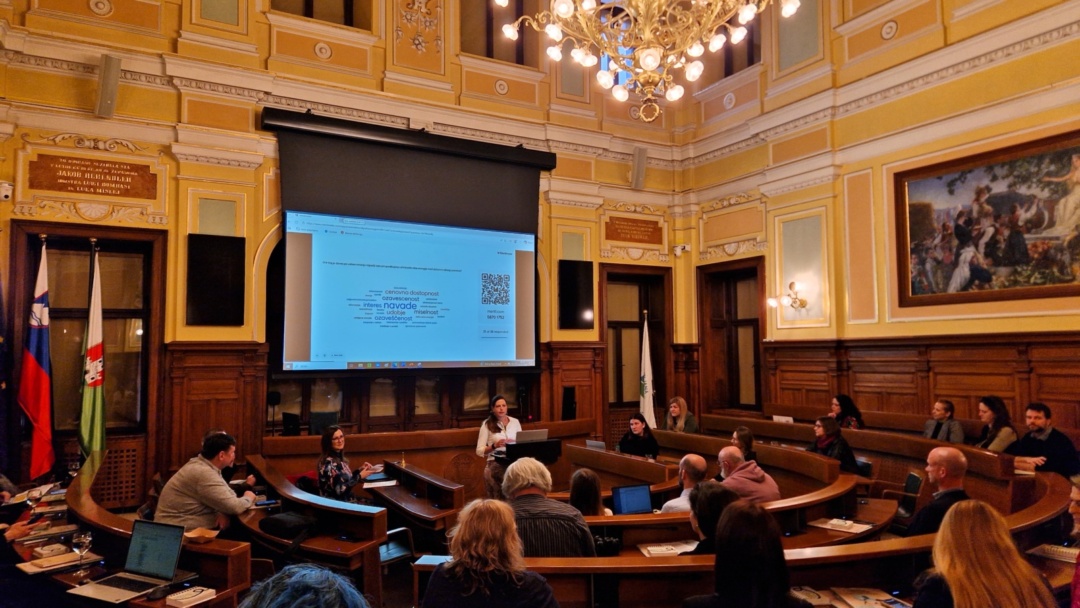
Featured at the event Small Changes, Big Savings – Energy Efficiency for a Sustainable Future and Lower Energy Bills, held on 11 March 2026 at Ljubljana City Hall, the EffiComfort project attracted significant attention as an innovative initiative in the field of energy services. The conference, organised by the Consumers Association of Slovenia (ZPS) and the City of Ljubljana, brought together representatives of municipalities, research institutions, non-governmental organisations, ministries and energy experts. Participants explored practical solutions for reducing energy consumption in buildings and improving living conditions for residents.
he programme provided a comprehensive overview of opportunities to improve energy efficiency – from insights into consumer habits and key steps in planning energy renovations of buildings to presentations on current financial incentives for citizens and discussions on how to effectively engage and motivate people to adopt more energy-efficient behaviour.
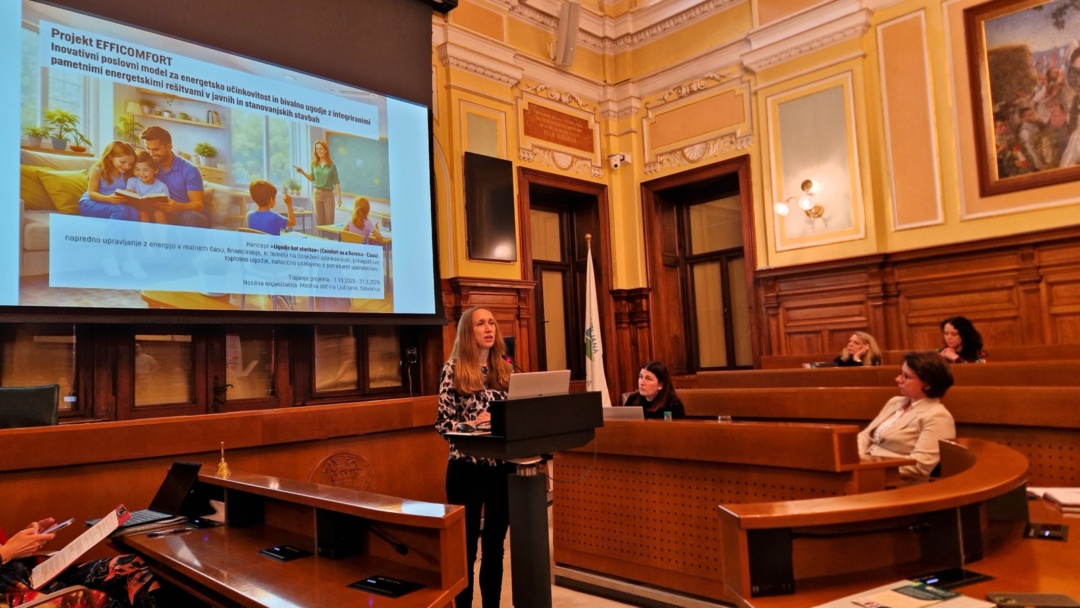
The presentation of the new innovative business model for energy efficiency and indoor comfort in public and residential buildings, developed within the EffiComfort project, complemented the conference programme ideally. In her opening remarks, Dr Petra Šeme, Head of the Energy Management Service at the City of Ljubljana, highlighted the important role the project plays in the city’s green transition.
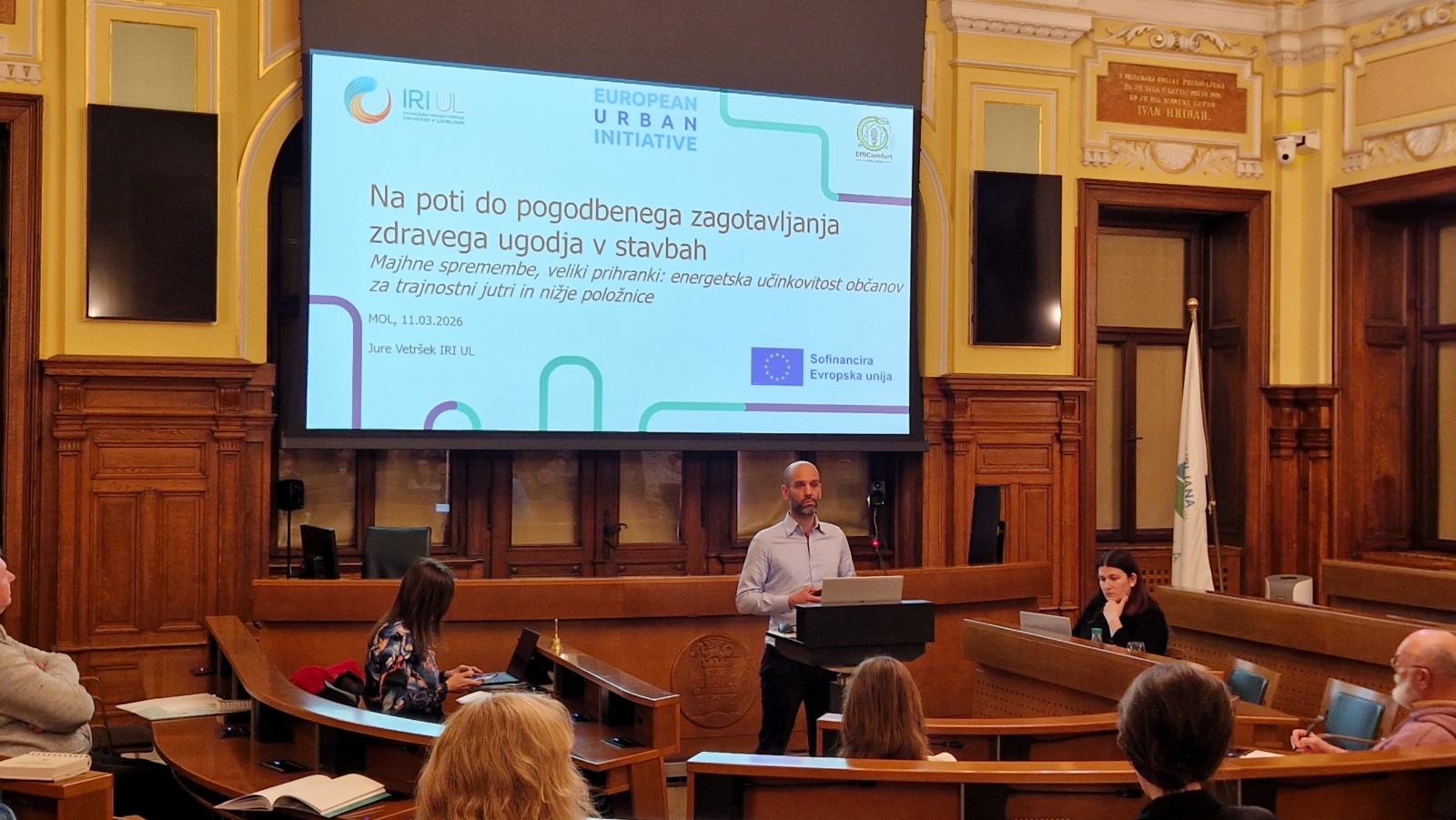
One of the key concepts of the project – comfort as a service – was presented by Jure Vetršek, MSc. from the Innovation-Development Institute of the University of Ljubljana. He pointed out that most of the energy used in buildings is actually consumed to ensure human comfort. Therefore, the focus should shift from simply purchasing energy to providing high-quality indoor environments:
“We are developing business models that provide ‘comfort as a service’, where healthier indoor conditions in buildings can actually be delivered at lower costs.”
Dr Andreja Kukec and Dr Anja Jutraž from the National Institute of Public Health (NIJZ) presented the importance of indoor environmental quality in buildings. Indoor environmental quality results from the interaction of air quality, thermal comfort, lighting and acoustics, all of which influence people’s health, well-being and productivity.
Their review of scientific literature and experiences from various projects shows that long-term exposure to inadequate indoor conditions – such as excessively low or high temperatures, poor air quality or insufficient ventilation – may contribute to negative health outcomes, particularly among vulnerable groups such as children and older adults. NIJZ joined the EffiComfort project because it has the potential to significantly improve health and well-being conditions for users of public buildings.
Another key topic of the conference was the importance of behavioural change in improving energy efficiency. Prof. Dr Tanja Kamin from the Faculty of Social Sciences emphasised that such changes are most effective when measures are designed holistically – from clear and practical recommendations for households to accessible services, community support and coordinated public policies. Recommendations should reflect people’s real living circumstances while ensuring thermal comfort, health and dignity.
The EffiComfort project represents a city-level pilot for the future of energy services and is developing a model that could be transferred to other municipalities, supporting broader national energy policy goals. As Mag. Erik Potočar, Director General for Energy at the Ministry of Environment, Climate and Energy, emphasised during the conference, “energy efficiency is not merely a cost, but a key investment in the future.”
In times of uncertainty in fossil energy markets, saving energy and using it efficiently not only brings environmental and financial benefits, but also strengthens the resilience of communities to energy and economic shocks.
The EffiComfort project is supported by the European Urban Initiative (EUI) and co-funded by the European Union.